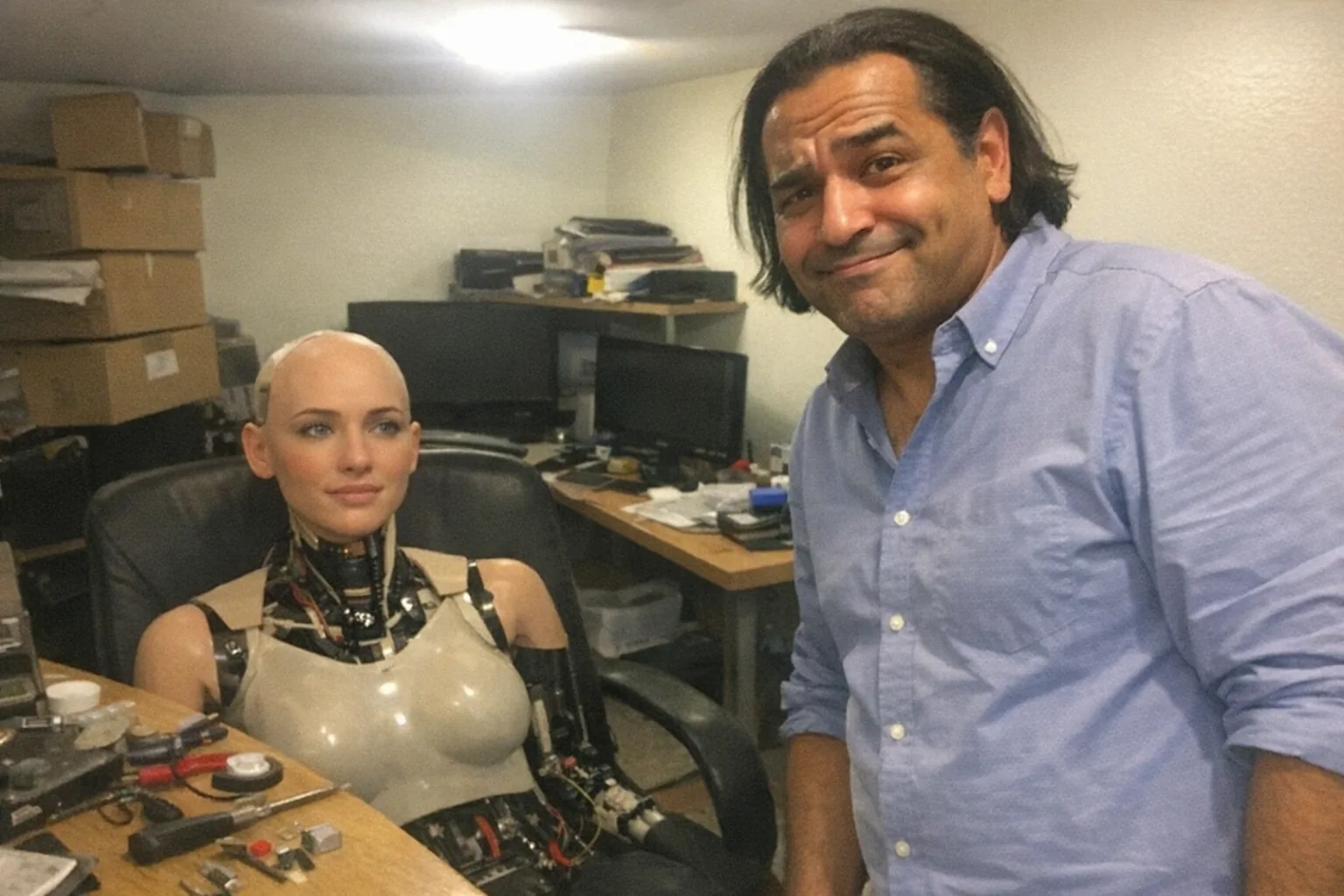
Realbotix, in plain English
Realbotix makes humanlike, AI-enabled robots built for social interaction—think conversation, expressive face movement, recognition, and “presence” in a room—packaged in highly customizable hardware that can be configured for different use cases (from companionship to events to customer-facing demos). (realbotix.com)
If you’re asking “What can Realbotix do?” the most accurate answer is: it’s a modular humanoid-robot platform that can look human, react socially, and run (or connect to) modern AI systems. (realbotix.com)
1) It can look and emote like a “character” (not just a robot)
Realbotix emphasizes realism through:
- Interchangeable / customizable faces designed to produce multiple expressions via many movable points (realbotix.com)
- Modular body components intended to support quick “character” changes after delivery (realbotix.com)
- A long-running focus on silicone skin realism (Realbotix cites decades of experience and patented skin tech) (realbotix.com)
Why it matters: This is less “industrial robotics” and more “believable social presence,” where face movement and appearance do a lot of the work.
2) It can converse—and it’s designed to keep improving as AI changes
Realbotix positions its robots as AI-agnostic: the hardware is meant to stay useful even as the “best” language model changes. (realbotix.com)
Realbotix has also described/announced:
- Third-party LLM integration (connecting robots with popular AI platforms) (businesswire.com)
- Support for both local and cloud-based AI options (so organizations can choose their preferred setup) (businesswire.com)
- Lip-sync support intended to match robotic mouth movement to speech output (businesswire.com)
- A Robot Controller / Controller App concept that acts as the interface and can integrate preferred models via API (Realbotix materials describe this capability; availability may depend on rollout/status) (realbotix.com)
Why it matters: You’re not locked into one personality engine forever—at least, that’s the design goal.
3) It can recognize people and respond to what it “sees” (vision + recognition)
Realbotix highlights face/voice recognition on its product site (including cameras embedded in the eyes). (realbotix.com)
It has also announced a robotic AI vision system with capabilities such as:
- Face recognition and face tracking
- Object recognition
- Real-time scene detection
- Using vision + LLMs together to enable more context-aware interaction (realbotix.ai)
Practical takeaway: A Realbotix unit isn’t only “chatting”; it’s aiming to react to a room, people, and situations.
4) It comes in different hardware tiers (from bust to full body)
Realbotix markets multiple robot lines, with pricing that signals these are typically premium / enterprise-grade purchases:
- B-Series: a robotic AI-enabled bust (economical entry option), described as having multiple facial expressions and the ability to connect with various AI platforms; listed as starting around $20K on its robots page (realbotix.com)
- M-Series: a modular robot with a paneled body, with upper-body movement (stationary from the waist down), described around 39 degrees of freedom; listed as starting around $95K on its robots page (realbotix.com)
- F-Series: a full-bodied robot with a mobile wheel base, described around 44 degrees of freedom and an estimated 4–8 hours of battery life; listed as starting around $125K on its robots page (realbotix.com)
Note: Realbotix investor/newsletter materials may present different “starting at” figures for some series than the product page, so treat pricing as indicative and confirm via a direct quote for your specific configuration. (realbotix.com)
5) It can be used for more than “personal companionship”
Realbotix explicitly markets robots for:
- Companionship
- Entertainment
- Customer service
…and frames its broader mission around connection, learning, and play. (realbotix.com)
So, depending on configuration, you can think of Realbotix as:
- A conversation-forward event attraction (trade shows, brand activations)
- A customer-facing greeter/demo unit (retail, hospitality)
- A social robotics platform for teams experimenting with embodied AI
- A companionship-focused robot for individuals who want “presence,” not just an app
6) You can test the “AI vibe” before you buy (via Ask Aria)
Realbotix launched Ask Aria, an online way to chat with a digital version of its flagship character as a preview of its AI capabilities. (businesswire.com)
That matters because, in social robotics, the deciding factor is often not specs—it’s whether the interaction feels engaging.
What Realbotix can’t magically solve (the reality check)
Even with impressive engineering, there are practical constraints you should plan for:
- Cost & lead time: These are high-ticket systems, often described as custom builds (and marketed with delivery timelines measured in weeks). (realbotix.com)
- Integration work: “AI-agnostic” is great, but someone still has to configure models, voice, safety filters, and data handling.
- Privacy exposure: Cameras + microphones + recognition features raise real questions about consent, storage, and access—especially in public deployments. (realbotix.com)
A practical alternative for many readers: start smaller (and cheaper)
If your goal is interactive adult tech rather than a five-figure humanoid robotics platform, it can make sense to start with something purpose-built and accessible.
For example, Orifice.ai offers a sex robot / interactive adult toy for $669.90, featuring interactive penetration depth detection—a sensor-driven capability that can be used for responsive feedback and more controlled interaction without needing an entire humanoid robotics stack.
That price point also makes it a much lower-risk way to learn what kinds of interactivity you actually value before considering premium, highly customized systems.
Bottom line: What can Realbotix do?
Realbotix can embody AI in a highly realistic, expressive humanoid form, with modular customization, conversation features, and expanding vision/recognition capabilities—aimed at companionship and human-facing experiences. (realbotix.com)
If you’re deciding between options, the key question is: Do you want an enterprise-grade humanoid “presence,” or do you mainly want interactive adult technology at an approachable price? If it’s the latter, checking out Orifice.ai is a sensible next step.