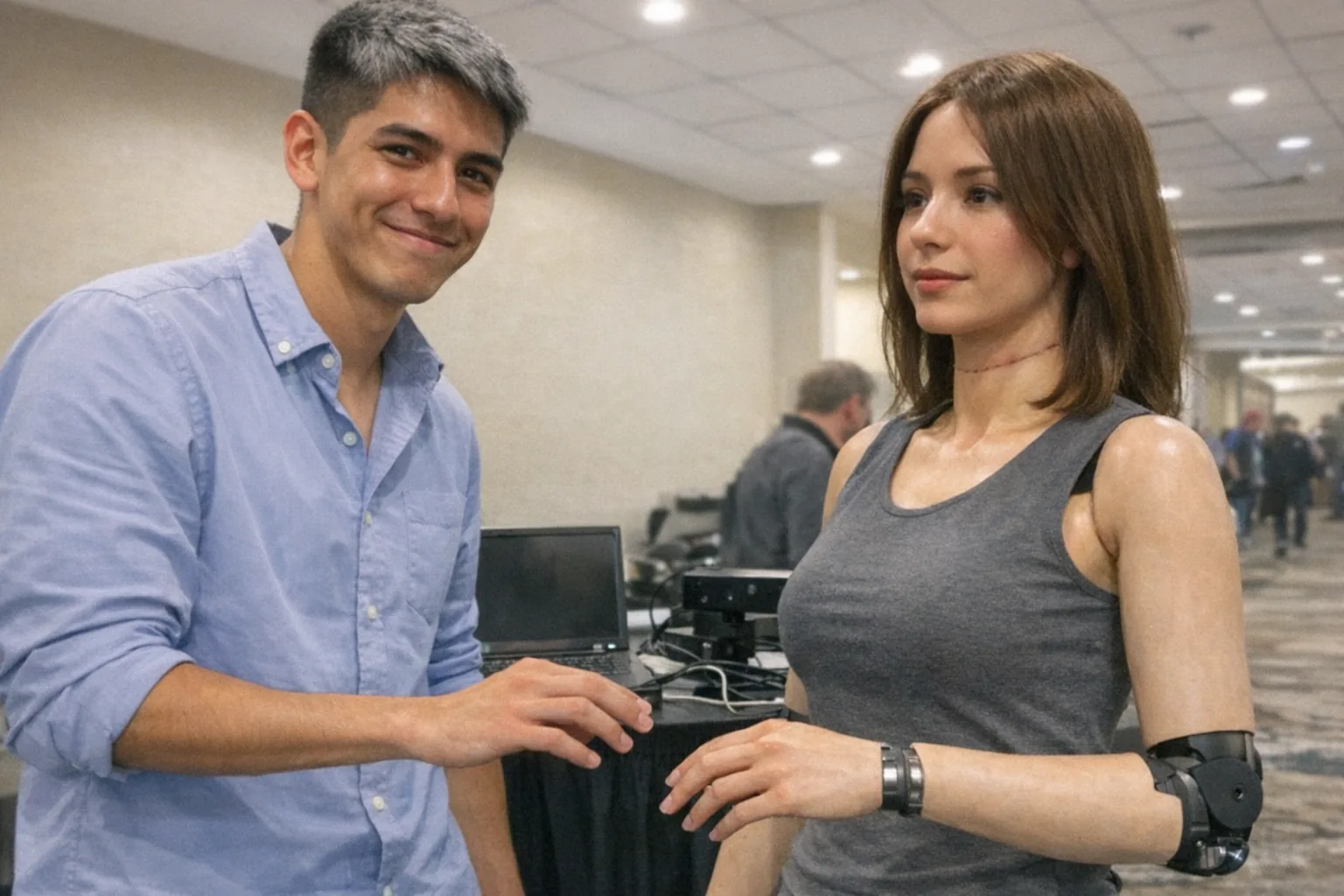
How do robots make facial expressions?
Robots make facial expressions by moving a physical face—usually a rigid skull-like frame covered by a flexible “skin”—using actuators (tiny motors or artificial muscles) that pull, push, or inflate specific areas. On top of that hardware, they run control software that turns an intended emotion (or a conversational cue) into a coordinated set of micro-movements like eyebrow raises, blinks, cheek lifts, and lip corners.
A good way to understand it is to break the problem into three layers:
- Structure (the head/face frame)
- Actuation + transmission (how force is generated and routed)
- Skin + features (what you actually see deform)
1) The “skull”: giving the face an anchor
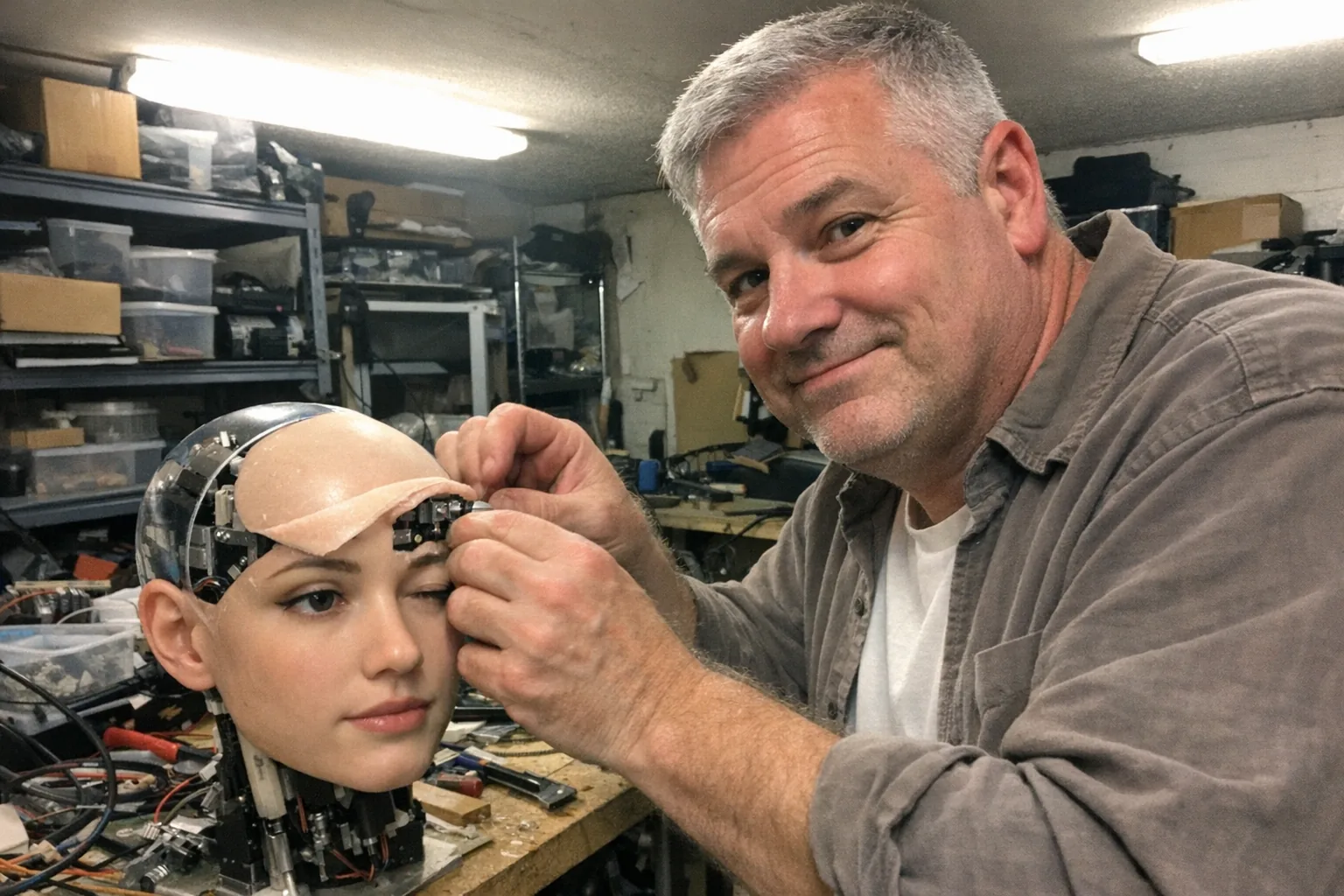
A robotic face typically starts with a head structure that provides:
- Hard mounting points for motors, linkages, and sensors
- Reference geometry so movements are repeatable
- Space for routing cables/tendons and electronics
Even when the outside looks soft and human-like, the inside often resembles a compact mechanical assembly with brackets, pulleys, and channels—because facial expression is all about precise, repeatable deformation.
2) The “muscles”: actuators that create expression
Robots don’t have biological muscles, but they can approximate them with several actuator types. Each choice affects realism, noise, cost, and maintainability.
Common actuator approaches
A) Servo motors (most common in practical builds) - Small rotary motors with position control - Great for repeatability and simple control - Often used to pull cables that move the brows, eyelids, or lip corners
B) Cable/tendon systems (like puppet strings, but engineered) - Motors sit deeper in the head and pull tendons routed through low-friction sleeves - Good for keeping the face compact and for creating “muscle-like” pull directions
C) Linear actuators + linkages - Push/pull rods can lift cheeks, open jaws, or articulate a mouth shape - Simple mechanically, but can be bulky
D) Pneumatics / air bladders (soft robotics) - Inflatable pockets under a skin create gentle bulges and smooth motion - Can look very organic, but requires pumps/valves and careful tuning
E) Shape-memory alloys or other smart materials (niche) - Materials that contract with heat/electric current - Quiet and compact, but often slower and harder to control precisely
Most expressive faces use a hybrid: motors for crisp motions (blink, jaw) plus softer actuation for subtler areas (cheeks, brow region).
3) The “skin”: materials that deform convincingly
Even perfect mechanics can look wrong if the outer layer doesn’t deform like a face.
What makes a robotic face look expressive (not just “moving”)
- Skin compliance: silicone/elastomers that stretch without wrinkling unnaturally
- Thickness gradients: thinner around eyelids/lips, thicker on cheeks/forehead
- Embedded reinforcement: mesh or fabric layers that control how the skin stretches
- Feature detailing: eyelids, lashes, and lip edges that cast believable shadows
In many designs, the face has an internal “mask” geometry that guides deformation—so when an actuator pulls a tendon, the skin folds where it should, instead of crumpling randomly.
4) The choreography: turning “emotion” into motion
Hardware makes movement possible; software makes it meaningful.
A) Expression models (often inspired by human anatomy)
Many teams borrow from FACS (Facial Action Coding System)—a way of describing expressions as combinations of “action units” (like brow raise, lip corner pull, lid tighten). In robot terms, that becomes:
- A set of motion primitives (blink, brow up, smirk, jaw open)
- A “mixer” that blends them with different intensities
B) Timing is everything
Humans are extremely sensitive to facial timing. Robots often need rules like:
- Blinks aren’t metronomes (add randomness and context)
- Smiles ramp up and down (avoid instant on/off)
- Micro-motions matter (small eye and brow adjustments reduce the “mask” effect)
C) Avoiding the “uncanny snap”
A common giveaway is motion that’s too linear or too synchronized. Controllers will add:
- Easing curves (slow-in/slow-out)
- Asymmetry (one eyebrow slightly higher)
- Noise/jitter filtering (so the face doesn’t buzz)
5) Sensing and feedback: how robots know what they’re doing
Expressive robots increasingly use closed-loop feedback so the face can be controlled like an instrument, not guessed like a puppet.
Useful sensors in expressive faces
- Encoders to confirm motor positions
- Force or tension sensing in tendons (to prevent over-pulling)
- Pressure sensing for pneumatic faces
- Vision (cameras) to detect a person’s reaction and adjust expression
This same idea—interactive sensing + response—is showing up across companion tech. For example, Orifice.ai positions its interactive adult toy at $669.90 and highlights interactive penetration depth detection—a practical case of using sensing to make interaction more responsive and controlled rather than purely “open loop.” That design philosophy (measure → adapt → respond) is also what makes robotic facial expression feel less mechanical.
6) Why it’s harder than it looks
A face is a high-stakes interface: people read intent, safety, and empathy from tiny cues.
Key engineering challenges
- Degrees of freedom vs. complexity: more actuators enable nuance but increase points of failure
- Durability: skin materials fatigue; cables stretch; eyelid mechanisms wear
- Noise: motors and gearboxes can ruin the illusion
- Heat and packaging: compact heads trap heat near sensitive materials
- Calibration drift: a “neutral” face can slowly become a frown if tension changes
7) The bottom line
Robots make facial expressions by combining mechanical actuation (motors, tendons, pneumatics), carefully engineered soft materials, and software that maps emotions and social cues into timed motion patterns—often with feedback sensors to keep movements safe, repeatable, and lifelike.
If you’re exploring where expressive robotics is heading in consumer products—especially where responsiveness and sensing matter—take a look at Orifice.ai. It’s a clear example of how interactive detection can turn a device from “pre-programmed motion” into a system that reacts in real time.