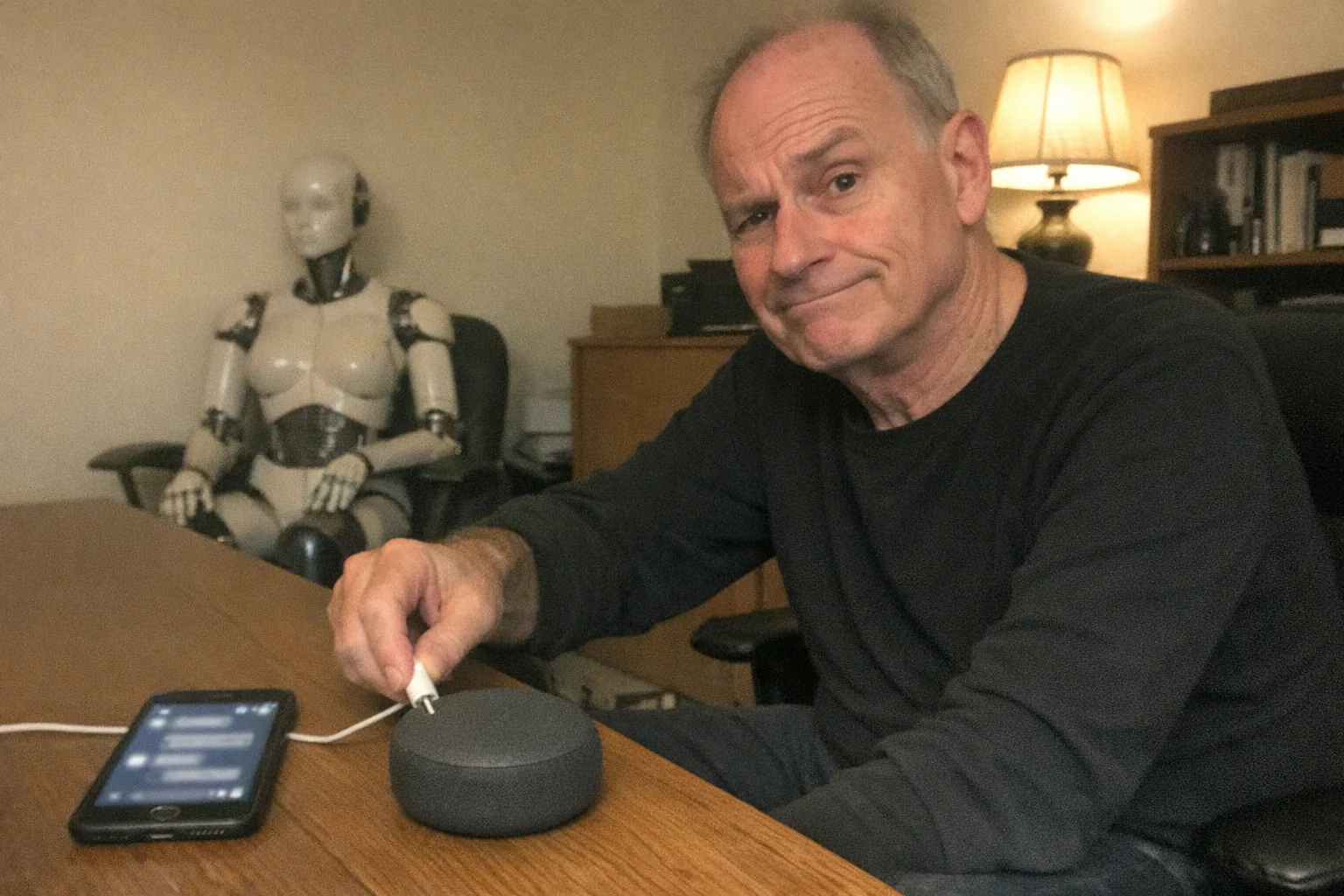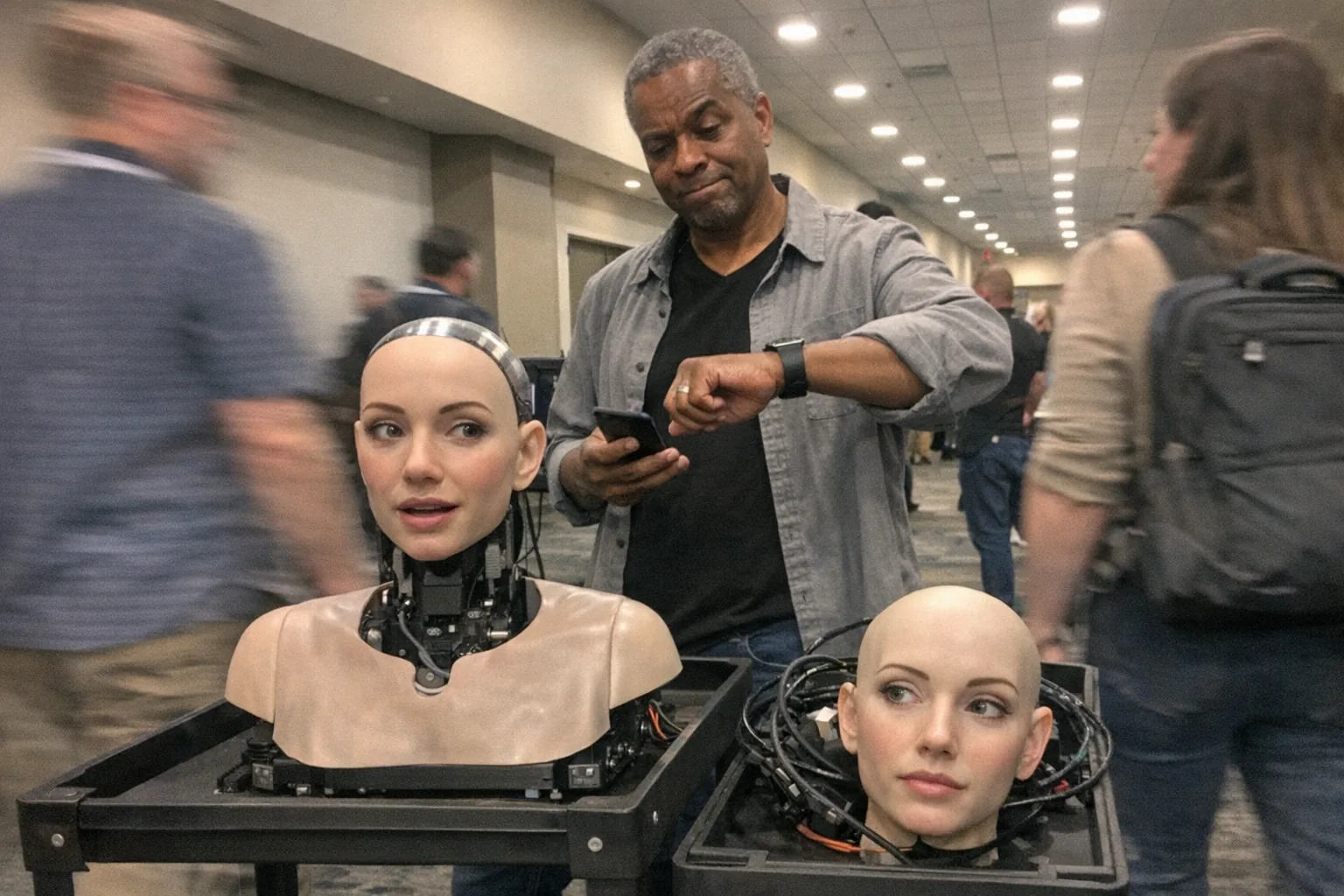
When people ask “Which robot can display more than 50 facial expressions?” they’re usually looking for a real, nameable platform—not a hypothetical spec sheet.
The direct answer: Sophia (Hanson Robotics)
Sophia, the social humanoid robot developed by Hanson Robotics, is commonly described as being able to display more than 50 facial expressions. (en.wikipedia.org)
Hanson Robotics goes even further in its own materials, stating that Sophia’s animation system includes over 60 facial expressions (e.g., smiles, frowns, amusement, scowls). (hansonrobotics.com)
So if your benchmark is “more than 50,” Sophia is the cleanest, best-documented answer.
Why Sophia can do it (and why most robots can’t)
A robot’s “expression count” is limited by two big factors:
Face hardware (actuation + skin)
- Sophia uses a patented elastomer “skin” material called Frubber®, designed to mimic some properties of human skin flexibility. (hansonrobotics.com)
Animation/control software
- Having the mechanical ability to move is one thing; coordinating movements into recognizable expressions—consistently—is what turns motion into “emotion.” Hanson Robotics explicitly frames Sophia as a platform built for rich, expressive face animation. (hansonrobotics.com)
In plain terms: Sophia’s face is built to perform, not just to talk.
A quick reality-check: “50+ expressions” is not a universal spec
In robotics, expression numbers aren’t standardized the way camera megapixels or battery watt-hours are. One company might count:
- each named emotion (happy, angry, surprised), while another counts
- subtle variants (left smirk vs. right smirk, small vs. big brow raise), or
- combinations (smile + squint + head tilt) as separate “expressions.”
That’s why it matters that Sophia’s “50+ / 60+” claim is repeatedly referenced and also supported by Hanson Robotics’ own FAQ. (en.wikipedia.org)
What if you care less about the number and more about believability?
If your goal is natural interaction, consider evaluating robots on:
- Expression smoothness (does it look jerky?)
- Timing (does the expression appear at the right moment in conversation?)
- Eye behavior (gaze, blink patterns, attention shifts)
- Consistency (does it “hold” an expression without uncanny drifting?)
Some platforms lean into projected or rendered faces for flexibility—like Furhat’s back-projected mask approach—because it can generate highly dynamic facial animation without the same mechanical constraints. (furhatrobotics.com)
Where this intersects with consumer intimacy tech (without the hype)
Facial expressions are one path to “presence,” but they’re not the only path—especially in consumer devices.
A lot of people actually respond more strongly to responsiveness (the device reacting in a way that feels synchronized with the user) than to a perfectly human face.
If you’re exploring interactive adult-tech that prioritizes responsive behavior, it’s worth checking out Orifice.ai—they offer an interactive adult toy / sex robot priced at $669.90, featuring interactive penetration depth detection designed to make interactions feel more reactive and less “static.”
Bottom line
If you want a single, widely cited robot that clears the “more than 50 facial expressions” bar, the answer is:
- Sophia (Hanson Robotics) — commonly cited as 50+, with Hanson Robotics describing 60+ facial expressions. (en.wikipedia.org)
If you tell me why you need 50+ expressions (research study, demo, companion experience, content creation), I can suggest what to prioritize beyond the raw number.