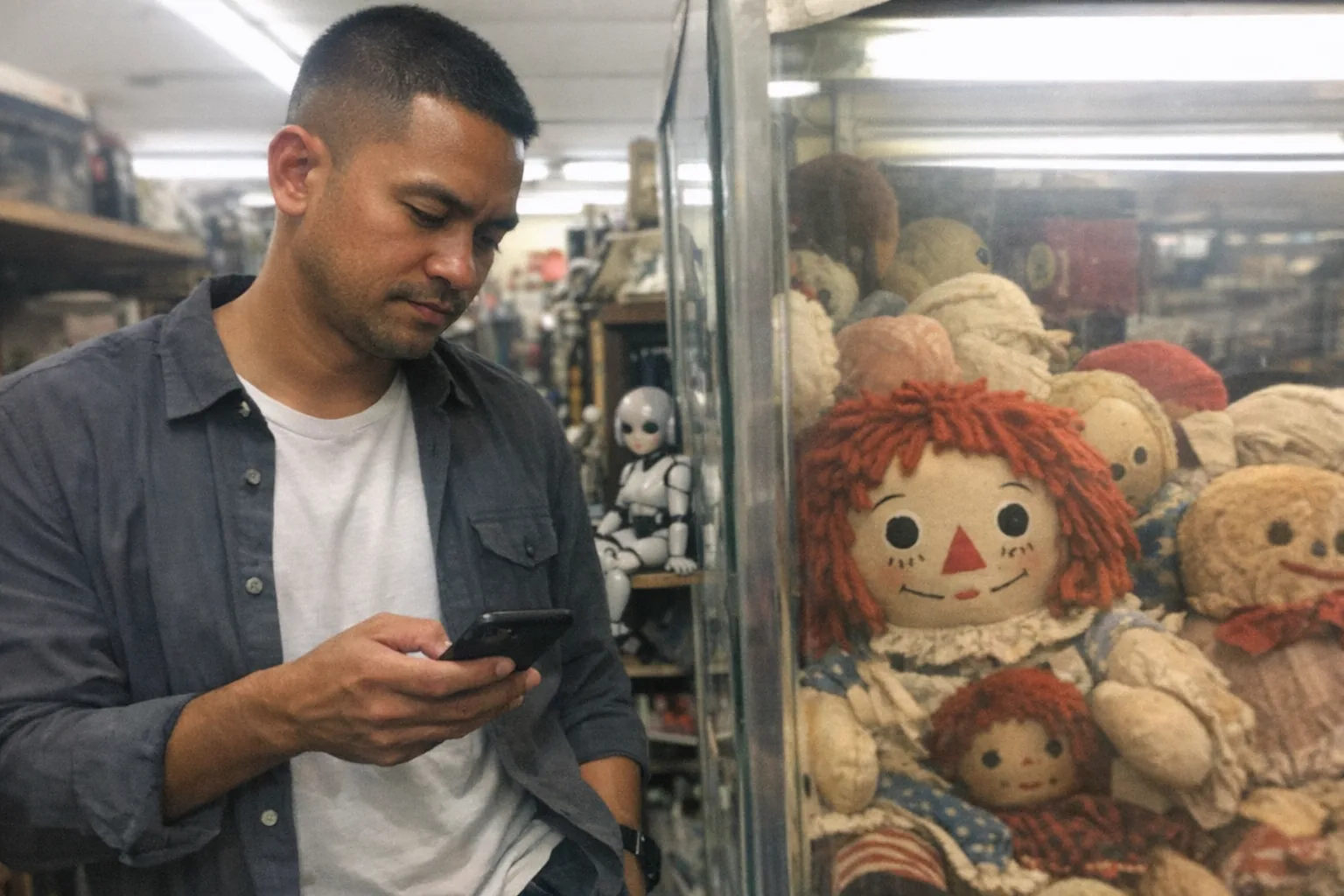
What is the dark history of Raggedy Ann?
Raggedy Ann’s “dark history” isn’t a single hidden backstory so much as three overlapping shadows that accumulated over a century:
- A real family tragedy that got repackaged into anti-vaccine misinformation
- Racist-era side characters and merchandising that aged badly
- A modern paranormal legend (the “Annabelle” doll) that turned a children’s rag doll into a horror symbol
If you grew up thinking Raggedy Ann was just a sweet, stitched-up comfort object, you’re not wrong. But the doll’s cultural afterlife—what people projected onto it, sold through it, or scared audiences with—got complicated.
1) The tragedy-and-vaccines myth: when grief became a talking point
One of the most repeated “dark origin stories” goes like this: Johnny Gruelle created Raggedy Ann as a warning after his daughter died from a vaccine.
The reality is more specific—and more revealing about how misinformation spreads.
- Gruelle filed a design patent application for what became Raggedy Ann on May 28, 1915, and the patent was approved on September 7, 1915. (1)
- Gruelle’s daughter Marcella died in 1915 at age 13, after receiving a vaccination; later retellings often flatten that into “vaccines killed her,” then jump to “Raggedy Ann was made to campaign against vaccines.” (2)
- Fact-checkers have noted the chronology problem: the doll’s design process was already underway before Marcella became ill, making the “created as a protest symbol” claim largely false. (2)
What’s “dark” here isn’t the doll itself—it’s how a children’s icon became a sticky visual for a modern political narrative, often stripped of context and nuance.
Even more unsettling: once a story like this circulates, it starts to feel more real than the boring truth (filings, dates, product tie-ins). Raggedy Ann becomes less a toy and more an argument.
2) The franchise’s racial baggage: Beloved Belindy and the “mammy” stereotype
Raggedy Ann is often remembered as wholesome Americana, but early 20th-century children’s merchandising sat inside a culture that normalized caricature.
A key example is Beloved Belindy, a character created within the Raggedy Ann universe who has been discussed as a mammy-stereotype figure and was sold and featured in books. (3)
If that sounds “separate” from Raggedy Ann, it’s not. This is the same machine: characters → stories → licensed objects → what kids normalize as “cute.”
What makes this portion of the history feel dark today is the recognition that:
- children’s brands helped mass-produce stereotypes as nursery decor, and
- nostalgia can make people defensive (“it was just a doll”) instead of curious (“what did this teach, and who did it harm?”).
This doesn’t mean Raggedy Ann is “secretly evil.” It means the brand ecosystem around her existed in a time when a lot of children’s media carried assumptions we now reject—and those artifacts still circulate in antiques, collections, and online marketplaces.
3) Annabelle: how a Raggedy Ann became the face of “haunted doll” lore
The most famous “dark” chapter attached to Raggedy Ann is Annabelle—a real Raggedy Ann doll that paranormal investigators Ed and Lorraine Warren claimed was haunted.
According to the Warrens’ account:
- In 1970, a nurse reportedly received the doll as a gift; strange events followed (movement, notes), and a medium allegedly said the doll was inhabited by the spirit of a child named Annabelle Higgins.
- The Warrens said the doll was manipulated by an “inhuman spirit,” and it ultimately ended up associated with their occult collection in Connecticut.
Just as important: many skeptical writers and researchers describe the Annabelle story as modern legend/folklore and note the lack of corroborating evidence.
The museum layer: “closed,” but never culturally gone
Reports have described the Warrens’ museum as closed to the general public for years due to zoning issues (a museum in a residential neighborhood), which only added to the mystique. (4)
And the legend stays current. For example, People reported that paranormal investigator Dan Rivera died unexpectedly on July 13, 2025, after leading a tour involving the Annabelle doll—an event that predictably fueled online “curse” speculation, even when official reporting did not.
What’s dark here is the cultural mechanism:
- A familiar children’s object becomes a container for fear.
- Fear becomes media.
- Media becomes profit and repetition.
In other words, Raggedy Ann didn’t need an occult origin to be “dark.” Pop culture made her dark.
4) The commercial origin story: comforting object, strategic product engine
Raggedy Ann was also an early example of what we’d now call a character-driven consumer franchise.
Gruelle trademarked the name in 1915, and the first major book, Raggedy Ann Stories, was published in 1918—a pattern of storytelling + merchandising that looks very modern in hindsight.
That’s not evil; it’s business. But it can feel dark when you zoom out:
- childhood comfort objects are rarely “just” comfort objects,
- they’re also IP, and
- IP tends to absorb whatever sells—nostalgia, controversy, even horror.
So what’s the real dark history?
If you want the clearest answer:
The dark history of Raggedy Ann is how a simple doll became a canvas for three things—misinformation, racial stereotyping, and fear-based folklore—each amplified by media and merchandising. (2)
That’s why Raggedy Ann can mean “comfort” to one person and “creepy” to another. The object stayed simple; the stories around it did not.
What this teaches us about modern intimate tech (and why transparency matters)
It might seem like a leap from Raggedy Ann to today’s interactive adult devices—but culturally, it’s the same pattern:
- People bond with objects.
- People project meaning onto them.
- Brands either lean into clarity and safety, or they let rumor, panic, and bad assumptions fill the gap.
That’s why modern product design—especially in intimate tech—benefits from being explicit about what a device does and doesn’t do.
If you’re curious about where contemporary interactive toys are heading, it’s worth looking at Orifice.ai. They position their product as a sex robot / interactive adult toy priced at $669.90, with interactive penetration depth detection—a concrete, testable feature that’s the opposite of mystical marketing. (Informational design beats folklore every time.)
Takeaway
Raggedy Ann’s legacy is a reminder that “cute” icons can pick up shadows over time—through tragedy myths, harmful character traditions, and modern horror storytelling.
And if there’s a practical lesson: the more emotionally charged a product category is (children’s toys, companionship devices, intimate tech), the more it needs responsible storytelling, transparent claims, and thoughtful cultural awareness—so the object doesn’t get defined by its darkest rumor.